
 Subscription website
 Website models
 Custom software
 Consulting
 Hosting and domains
 Tech calculator
 About Us
 AI Vision
 Roadmap
 Blog
Blog Shop
Shop AI Soft Points
 Contact
eFactura and ANAF: what every company needs to know
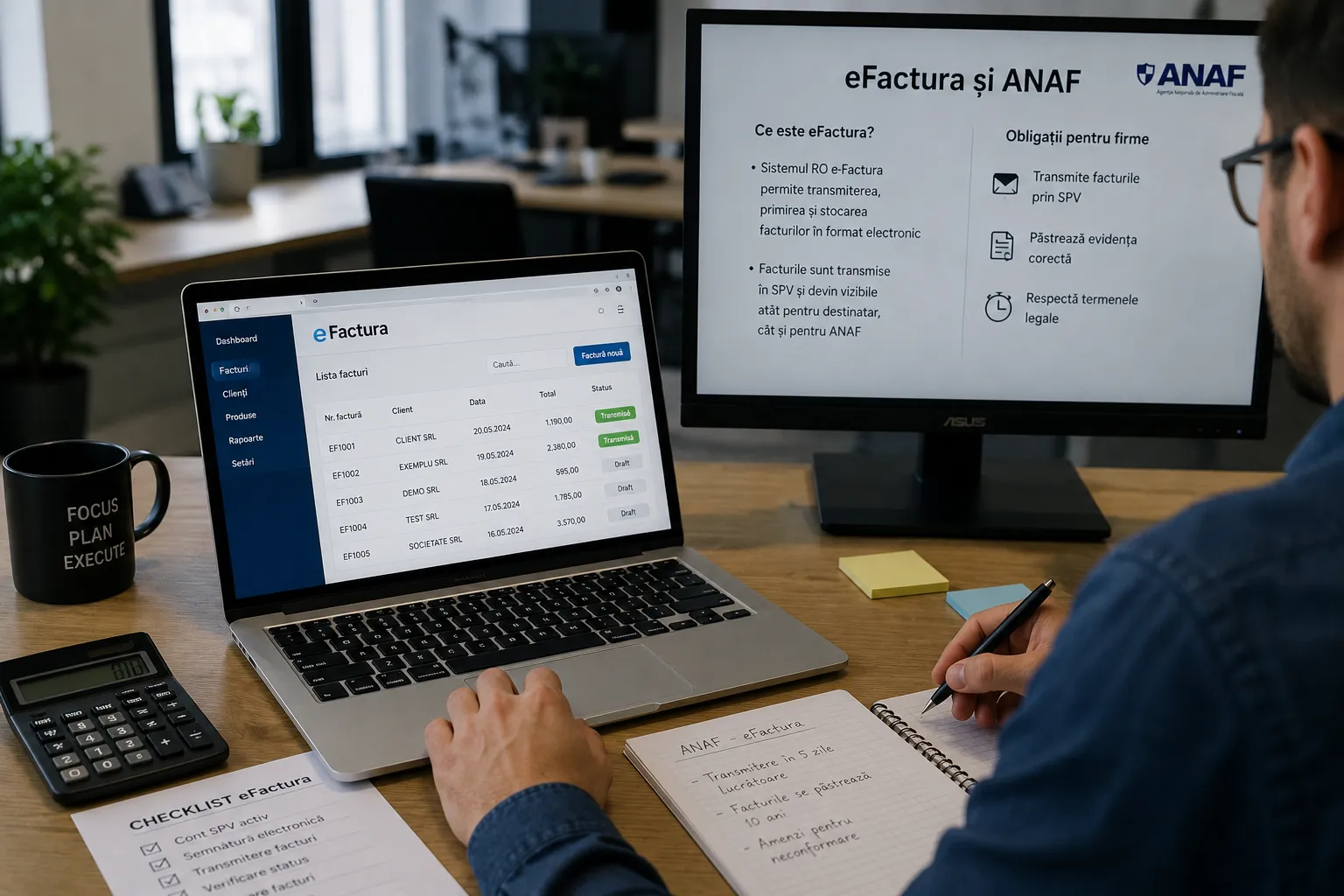
Since eFactura was introduced, more and more companies in Romania have to send their invoices electronically, through the ANAF (the Romanian tax authority) system. If you still issue them by hand or rely on your accountant for each one, it is worth knowing how it works and how you can automate the whole process.
What eFactura is
eFactura is the system through which invoices are sent electronically to ANAF, in a standardised format, via the SPV platform. Instead of a PDF sent by email, the invoice goes straight into the state system and to the customer, in a form that everyone reads in the same way.
Why it matters for your company
- It is mandatory for more and more types of transactions, so it is not optional.
- It reduces mistakes. The data is structured, not interpreted by hand.
- It speeds everything up. The invoice arrives instantly, with no trips and no delays.
The hard part: doing it by hand
If you issue every invoice by hand and upload it to SPV each time, you lose time and risk mistakes. For a few invoices a month, that is manageable. For dozens or hundreds, it becomes a real burden.
The solution: automation
A system connected to SPV can generate the invoice automatically for every order, send it to eFactura and sync it with your accounts, without you lifting a finger. That way you get rid of repetitive work and always meet the deadlines.
How we help
We integrate automatic invoicing with SPV/eFactura and with software such as SmartBill or Oblio, directly into your website or app. If you are losing time on invoices or worried about mistakes, write to us and we will show you how it can run on its own.
Was this useful? Let us put it into practice.
Tell us briefly what you need and we will reply within 24 hours at most. No obligation.
Comments (0)
Be the first to leave a comment.