
 Subscription website
 Website models
 Custom software
 Consulting
 Hosting and domains
 Tech calculator
 About Us
 AI Vision
 Roadmap
 Blog
Blog Shop
Shop AI Soft Points
 Contact
Website security: what it means and why it matters
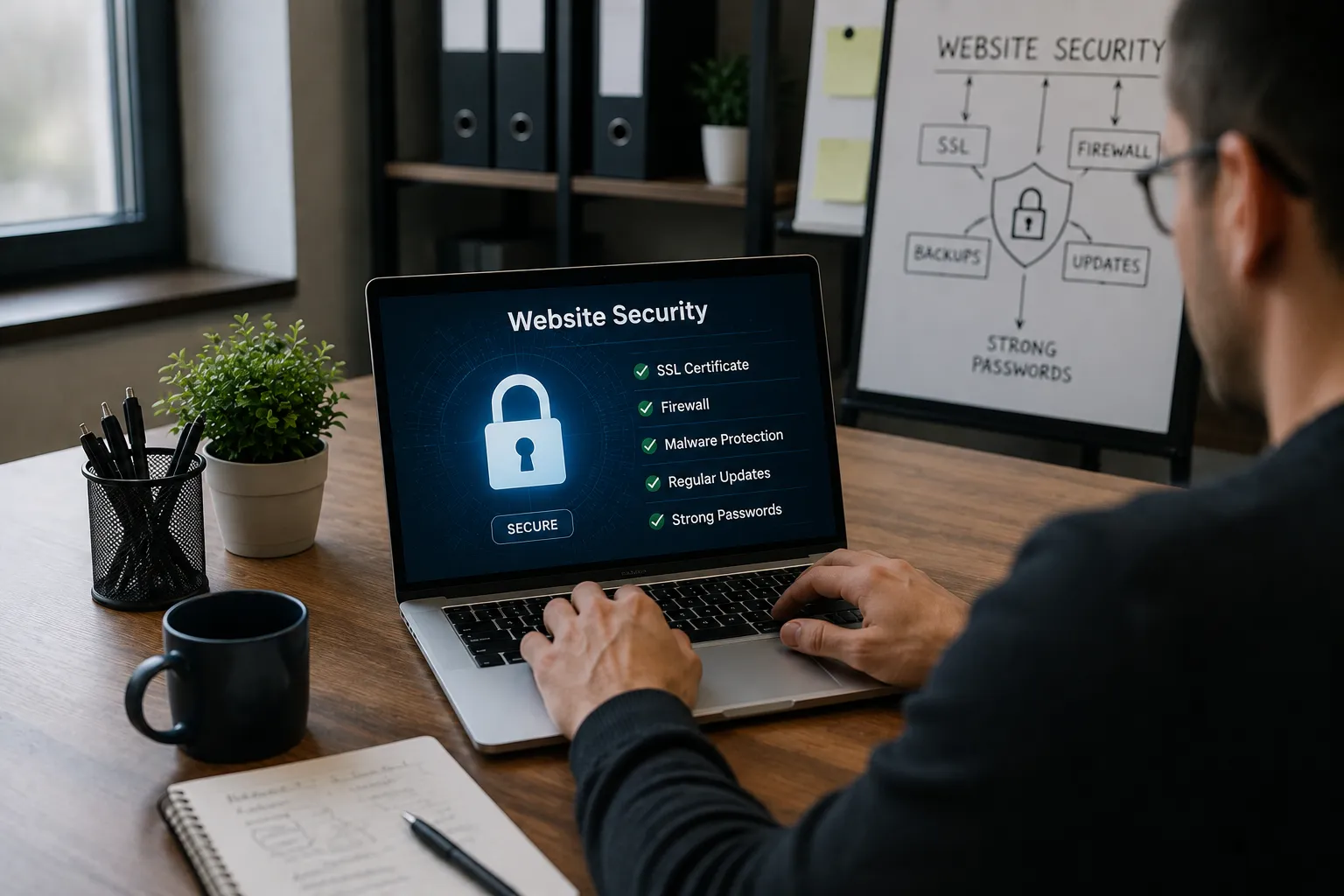
Website security usually only gets talked about when it's too late, after something has been hacked. In reality, security isn't a product you add at the end but the way you build from the start. Here's what it means in practice and why it concerns you.
What you're actually risking
An unsecured website can be hacked, altered or used to send spam. Worse still, customer data can be stolen, which means a loss of trust and even legal trouble. For a business, a breach like this costs far more than prevention would have.
What a secure website looks like
- An encrypted connection. HTTPS, so the data travelling between the visitor and the site can't be intercepted.
- Protected passwords. Never stored in plain text, always encrypted.
- Code without holes. Protection against the classic attacks where someone tries to trick the website.
- Backups. Regular copies, so an incident doesn't mean losing everything.
Why plugins are a risk
Websites built from lots of third-party plugins also inherit those plugins' vulnerabilities. Every component added by someone else is a door you don't control. Clean code written from scratch has far fewer of these doors.
Security is a process, not a button
There's no magic security button. It means building things properly, updating regularly and paying constant attention. That's why maintenance isn't a luxury but part of keeping your website safe.
How we help
We build secure websites from day one, with HTTPS, encrypted passwords and clean code, and we offer maintenance with backups and updates. We can also carry out a security audit of an existing website. If you want to know how well protected you are, get in touch.
Was this useful? Let us put it into practice.
Tell us briefly what you need and we will reply within 24 hours at most. No obligation.
Comments (0)
Be the first to leave a comment.